BirkenstockReport is an Alaskan geocacher with a mission: to make geocaching more inclusive and accessible while celebrating adventure and exploration in all its forms.
As a young adult, an autoimmune disease left BirkenstockReport paralyzed for 6 months. Now in recovery, she wears Birkenstocks, a type of sandal, to help her feel the terrain underfoot.
With each geocache she finds, she leaves a “Birkenstock-friendly” rating to let others know what kind of terrain (and footwear) to expect.
In this interview, BirkenstockReport provides thoughtful insight on how geocachers of all abilities can find an adventure that meets their needs.
Geocaching HQ: When did you start geocaching?
I started caching in May of 2025! I am almost complete on a 366-day streak! I have lived in South Central Alaska for the last ten years and have been so overwhelmed by how great the caching community is up here.
Geocaching HQ: How did you select your username? Does it hold a special significance for you?
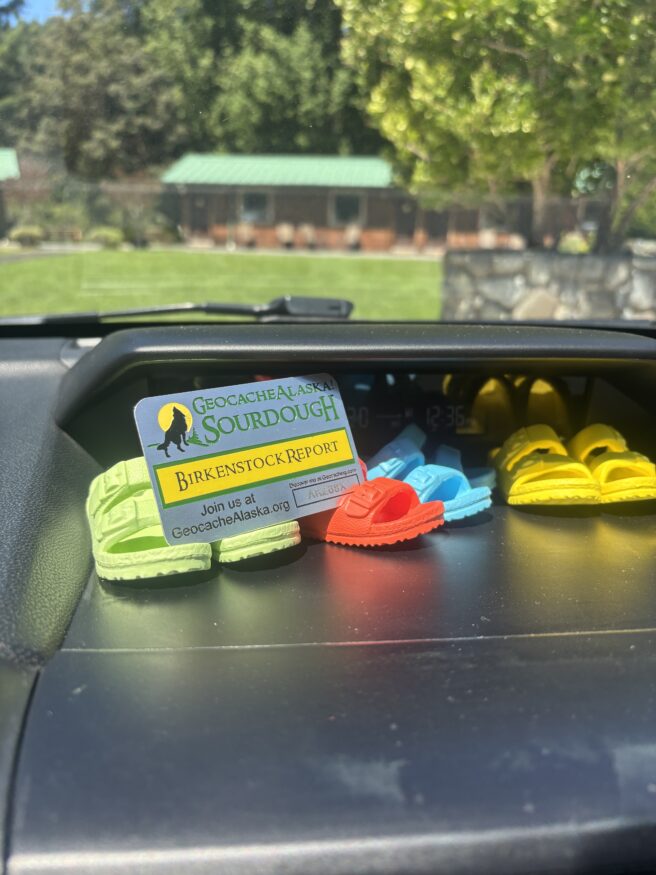
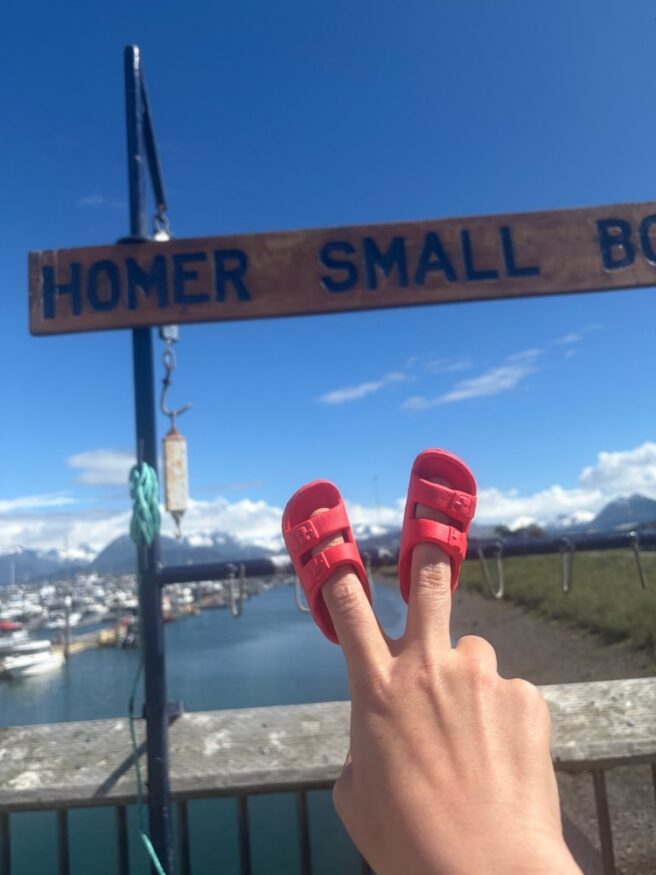
My username is BirkenstockReport. I wear neon colored Birkenstock Arizona UVA sandals pretty much every day of the year. Sometimes even with socks! I earned my name by providing a “Birkenstock-friendly” rating on all the caches I find. When I rate a cache, I am basically telling you if you could find this cache wearing rubber sandals.
The reason behind the Birkenstocks is that I had a bout with Guillain-Barré syndrome when I was 19. I lost feeling in my hands and feet, and grew slowly paralyzed until my amazing team of doctors at OHSU could diagnose me. I received donor antibodies (thank you for your blood donations!) and regrew my nerve function over the next year, but even after I learned to walk again, the hands and feet never really came back. You can learn more about my journey here. As a result, I find that the fewer layers on my hands and feet, the less clumsy I am, hence the toes out in an arctic climate. I do find caches while wearing boots or tennis shoes when I need to, but only to protect my skin, since I often don’t realize when I have a splinter, a blister, or frostbite.
Geocaching HQ: Many of your cache logs include a “Birkenstock rating.” Can you explain your rating system?
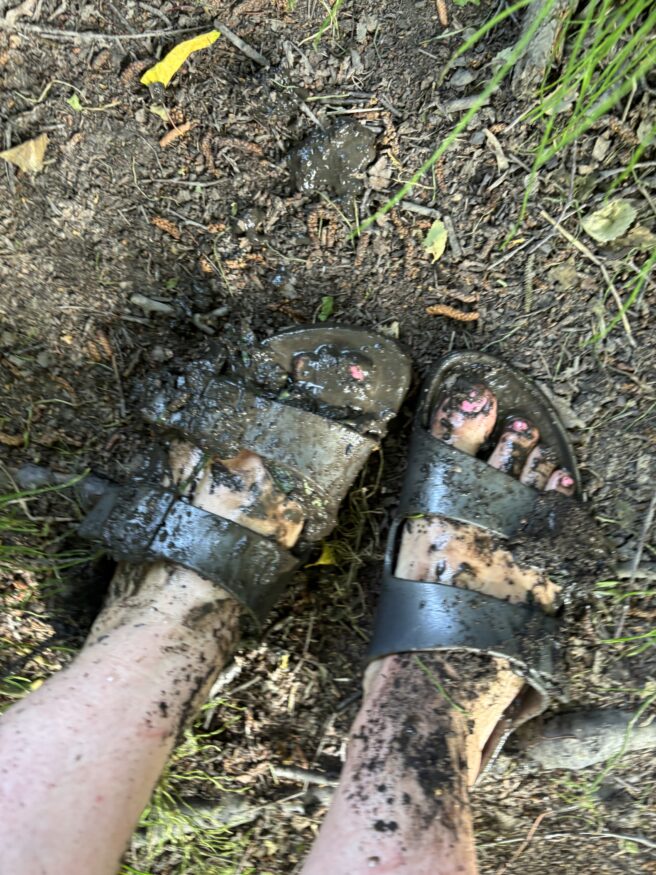
The system can be kind of arbitrary, and also depends on the season. Winter caching in Alaska is not for the weak, so I try to project what it might be like in summer for most of my ratings. A 10/10 means that the cache is probably 100% Americans with Disabilities Act (ADA) accessible, which doesn’t just mean that it’s on paved ground. I pay attention to how far the curb dip is from that portion of the sidewalk, and if there are ADA spaces in the parking lot. I don’t need those supports anymore, but sidewalks without curb dips used to be the endgame for me. A 9/10 is probably a cache hidden on a well-stomped trail. An 8/10 probably isn’t ADA-friendly, but it is probably a grassy area free of thorns and large rocks to trip over. The next big impact is slope. A steep terrain of any kind can make me slide right out of the backs of my shoes, or slide through them and tear them. Those generally run about 5/10. Anything below a 5 means that I would have swapped out to tennis shoes or boots if I had planned better. A low Birkenstock rating does not mean the cache is bad. It just means that I had to plan my route more carefully or come back with friends to be successful.
Geocaching HQ: What are your must-have supplies or TOTTs (Tools of the Trade)?
My must-have TOTT is bear spray and friends to talk loudly when we are out and about with the big creatures. My other favorite TOTT is my extendable hook. I think it’s usually for grabbing frisbees, but we have a lot of urban high-terrains that require tree climbing or fishing, and I love those ones! Mirror sticks are also great for checking under ledges and such. Caching in Alaska is awesome because you can kinda throw your hands in any little nook and not worry about snakes and spiders, but you can still end up with cuts and bites if you’re not careful.
Geocaching HQ: When you plan an outing, how do you know which geocaches will be accessible?
I love to review logs when I am winding down for the night. If I plan to explore an area, I make a list of caches that I think will be accessible to me. I can handle long walks and steep climbs, but I do struggle with caches that require balance, such as some tree climbs, and especially caches that say “you’ll feel it before you see it.” No, I won’t! I call these splinter caches because I pretty much only come up with splinters that get infected. I really appreciate it when COs include that line on the page or in the hint, because I know to save it for a group outing, or at least to try and pack a mirror stick.
I also find that boulder fields, such as the one that leads to one of Alaska’s oldest caches, can be pretty tricky for me. I’m still going to do it; I just know that I need to take my time and wear layers so that when I do slip, I don’t get scratched and bruised.
I’m also probably never going to get a rock climbing cache, and that’s OK! Not all caches need to be for all bodies. That would make the game horrible, because cachers are diverse people and like finding different caches. The important thing is just that the cache page has as much information of that sort as possible to help someone decide what works for them.
Geocaching HQ: What are some misconceptions about geocaching and accessibility?
- Pavement is not automatic accessibility. There are a lot of factors that make a cache accessible or inaccessible. Check out Handicaching.com to explore their rating system to help you understand the factors for people who use mobility devices.
- Not all disabilities require the same supports or TOTTs.
- There is nothing wrong with hiding only high terrain caches. Hide the kind of caches you want to find.
- Not all disabilities require terrain considerations. Warning someone that a cache has flashing lights or a jump scare is helpful, too, if you can find a way to do it without spoiling it. One of my favorite caches of all time would be a nightmare for some of my friends with auditory concerns.
- There are caches with higher terrain that are still ADA accessible– especially Virtuals and EarthCaches that can be completed by boat, and Traditionals/Mystery Caches/Multi-Caches that can be found while sitting in a kayak or on a 4-wheeler or while riding a horse. Some of these seem obvious, but if it’s not, consider sharing that on your cache page.
Geocaching HQ: How can cache owners make their caches more accessible?
Be a yapper! Talk about your cache on the cache page. You can do this in a very straightforward way by using a handicaching rating, or explaining the terrain with bullet points, or you can just tell the story of the day you hid the cache. Telling us about where you parked, how far you hiked, what you saw along the way, the snacks you had, what the grass and mud felt like when you slipped, how bad the mosquitoes were, whatever you want. That storytelling shares essential info that can help a cacher decide if this cache is right for them. Plus, reading logs and cache pages is fun. Maybe even more so for people who don’t get to be out in the outdoors as much as they’d like.
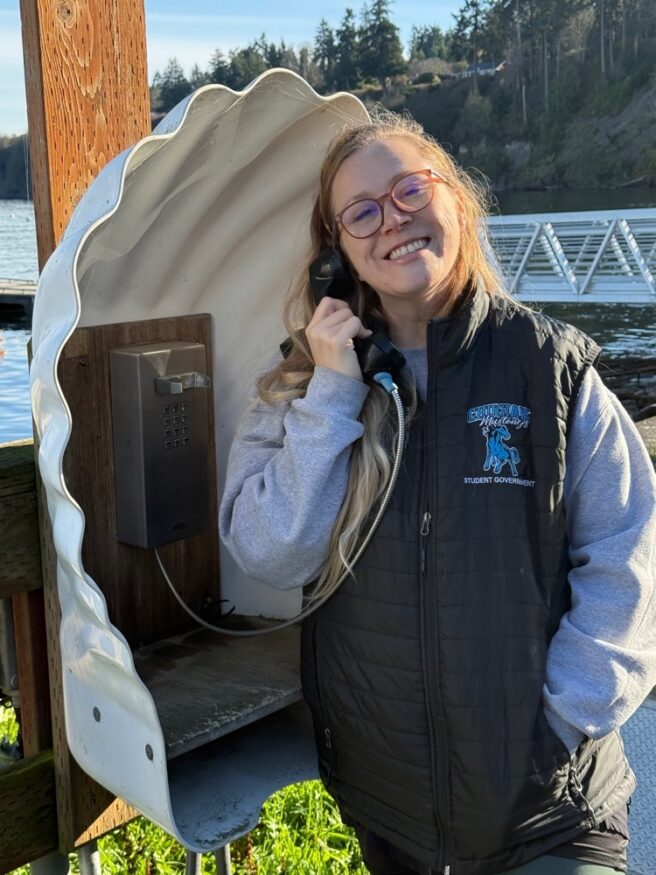
Geocaching HQ: What’s your favorite part about geocaching? What keeps you engaged with the game?
I love being together across time in nature and sharing those experiences with people around me.
I am also a stats nerd and love challenge caches. If you’re feeling stuck in a rut, find some challenge caches and challenge yourself! You don’t even need to sign the log to take on the challenge (just don’t log as found until you’ve actually signed the log, of course).
I am also OBSESSED with the Cache Odyssey series. This is a set of six GeoTours that has hidden a fully ADA-accessible Letterbox Hybrid geocache in each state. They worked really hard to make sure that every cache was unique and interesting. Most of them are Large and require multiple stages or gadgets to find the logbook, and are an awesome way to introduce a friend to geocaching. My first find was obviously the Alaska Cache Odyssey, but every time I travel to a new state, that’s the first cache I look for.
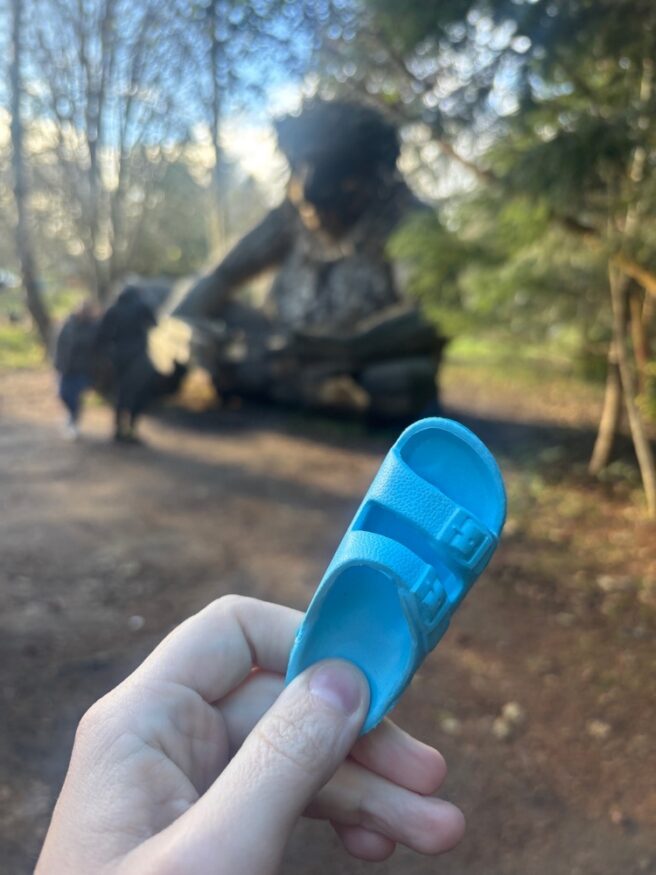
BirkenstockReport challenges all of us to think more deeply about what “accessible” actually means. Accessibility is more than just an attribute—it includes terrain, environmental conditions, safety information, and detailed cache descriptions.
Do you consider accessibility when geocaching? Tell us your story in the comments below.
PakarPBN
A Private Blog Network (PBN) is a collection of websites that are controlled by a single individual or organization and used primarily to build backlinks to a “money site” in order to influence its ranking in search engines such as Google. The core idea behind a PBN is based on the importance of backlinks in Google’s ranking algorithm. Since Google views backlinks as signals of authority and trust, some website owners attempt to artificially create these signals through a controlled network of sites.
In a typical PBN setup, the owner acquires expired or aged domains that already have existing authority, backlinks, and history. These domains are rebuilt with new content and hosted separately, often using different IP addresses, hosting providers, themes, and ownership details to make them appear unrelated. Within the content published on these sites, links are strategically placed that point to the main website the owner wants to rank higher. By doing this, the owner attempts to pass link equity (also known as “link juice”) from the PBN sites to the target website.
The purpose of a PBN is to give the impression that the target website is naturally earning links from multiple independent sources. If done effectively, this can temporarily improve keyword rankings, increase organic visibility, and drive more traffic from search results.