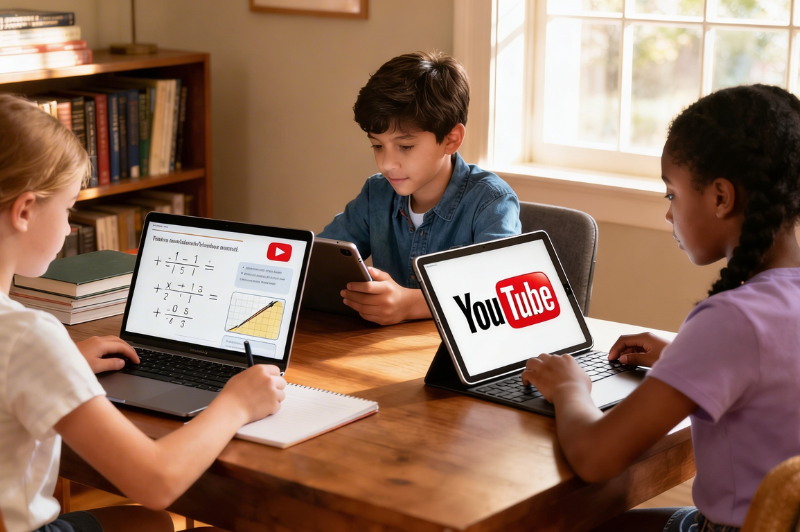
The best children’s YouTube channels can support education for kids when the content has a clear teaching job, fits the child’s stage, and keeps attention on the lesson instead of constant distraction. Parent and teacher guides group strong options by age, topic, and learning purpose rather than treating all kids’ video content as the same thing. That distinction is important because a phonics video, a science explainer, and a drawing tutorial do very different work.
Video can help when it gives a child another route into the idea. A preschooler may respond to rhyme, repetition, and movement. An older student may need a short science explanation, a worked math example, or a read-aloud before tackling independent reading. Useful video does not replace school or guided learning. It supports recall, understanding, and curiosity when the match is right. Educational roundups for families and teachers keep returning to this point through age-based and subject-based recommendations.
What to Check Before Choosing Children’s YouTube Channels
Check the controls first
Parents should start with controls before picking any video from YouTube channels. YouTube Kids allows settings such as Preschool, Younger, Older, or approved content only. Autoplay can also be turned off. These filters help narrow the feed, though they do not replace previewing.
Watch the pace and pressure inside the video
A useful video keeps the child close to the lesson. A weaker one may lean on noise, fast cuts, or constant distraction. This check is important when reviewing educational shows for kids, because the format can affect how much a child actually takes in.
Decide the purpose before you share it
A title can be misleading. Some videos teach directly. Some support school topics. Others simply fill time. Parents should decide the purpose first, then choose with care. This also helps when sorting through broad YouTuber’s education content online.
Best Children’s YouTube Channels for Early Learning and Kindergarten
Early-learning video works best when the lesson is clear, visual, and easy to follow. Guidance for younger viewers usually points parents toward videos built around songs, movement, stories, and play. That matches what many families search for first. They want help with letters, counting, early speech, routines, stories, and very basic knowledge about the world.
Song and routine channels for letters, numbers, and speech
This format works because it repeats the target skill without making the lesson feel heavy. Letter songs, counting videos, and movement-based routines help children hear, see, and act on the same idea at once. Repetition supports memory. Movement adds another cue, which helps when language and attention are still developing. Parents searching funny videos for kindergarteners should still check whether the humour supports the lesson or pulls attention away from it.
Story-led channels that build listening and vocabulary
Story-based video can work well for children who respond better to spoken language than direct instruction. Read-aloud content supports vocabulary, listening stamina, and comprehension because the child follows narration, pictures, and sequence together. The useful part is not length. The useful part is clarity, pacing, and strong language exposure.
What works best for younger children at home
Short sessions usually work better than long playlists. Choose one learning target before pressing play. Co-viewing helps because a quick retelling, a repeated word, or pointing to an object can turn passive watching into active education for kids during the session itself.
Best Educational Shows for Kids Who Need School-topic Support
As children move into school-focused learning, the way parents choose videos needs to change. At this stage, families usually need subject support rather than broad entertainment with a learning label attached. This is where educational shows for kids become useful at home. Teacher roundups usually sort helpful video resources by subject because the viewing needs of a child learning fractions are very different from the needs of a child reviewing ecosystems, sentence structure, or reading comprehension.
Science and nature videos
Science videos can help when a child needs to see an idea before reading about it in detail. Short explainers, demonstrations, and question-based clips can make abstract topics easier to enter. A strong science video keeps its focus narrow, uses clear narration, and builds understanding through examples instead of rushing through a long chapter.
Math and logic videos
Math support needs a stricter standard. A child must be able to follow the method, not merely enjoy the video. Useful math videos make the pattern visible, work through an example clearly, and avoid clutter on the screen. Early numeracy videos serve a different purpose from videos built for fractions, multiplication, place value, or equations.
Reading, history, and general knowledge videos
Some children need a spoken route into a topic before they can manage the text with confidence. Story-based explanations, history summaries, and general knowledge clips can lower that barrier. Video works well here because it gives the child language, context, and examples before independent reading begins.
Best Children’s YouTube Channels for Creativity, Making, and Curiosity
Educational value is wider than direct school support. Creativity and making channels teach through the process. The child watches a sequence unfold, follows it step by step, and sees a visible result at the end. Parent recommendation pages group this type of content separately from academic explainers because it builds a different set of skills. Art, craft, making, and curiosity-driven STEM content help children observe carefully, follow order, and persist through a task.
Art and drawing videos
Drawing and craft content helps children learn how to watch, copy, correct, and continue. The value is not limited to art. A child also learns sequencing, attention, and visual comparison. Each line or step changes the result, which makes the task easy to follow and easy to check.
DIY and maker videos
DIY and maker content works well for children who like building, experimenting, and learning through visual tasks, which is also why some children are drawn to creator-led formats such as Minecraft YouTuber’s content. A small build, a kitchen experiment, or a paper project gives the child something concrete to attempt after viewing. This makes the session easier to remember because the idea moves from screen to action.
Why creative video still counts as education for kids
Creative content teaches process. A child has to notice the order, copy the step, and keep working until the task is complete. Parents looking at YouTubers’ education options should not dismiss maker or drawing content when the child is clearly learning to plan, follow, and finish. Children who enjoy creative video formats may also become curious about how to become a YouTuber, which can open a useful conversation about planning content, speaking clearly, and creating with purpose rather than only watching passively..
Choosing Safer Search Terms for Kids on YouTube
Broad search terms can create mixed results. A search for free movies for kids may return safe family viewing, ad-heavy uploads, entertainment-first content, or low-value filler. The phrase sounds useful, though it does not tell you anything about pacing, age fit, or learning value. A search for funny videos for kindergarteners has the same problem. Child-friendly does not automatically mean educational.
A better route is to search for a learning job. Use terms like phonics songs, early counting videos, read-aloud stories, science explanations for children, or drawing tutorials for kids. The result tends to be cleaner because the intent is clear from the start. Parent guidance pages on kids’ video content consistently favor curation and previewing over broad browsing for this reason.
How to Build a Better YouTube Routine for Students at Home
A better home routine starts before the video begins. Choose the topic, the channel type, and the viewing length in advance. This keeps the session from drifting into an endless feed and makes it easier to tell whether the video actually helped. Supervised settings, content levels, and autoplay controls can support that structure, though the parent still needs a clear reason for choosing the clip.
Match the video to the child’s age and school level
Age fit affects more than safety. It affects vocabulary, pacing, and how much explanation the child can hold.
Keep watch time purposeful
A small set of strong videos is usually better than a long chain of unrelated clips. Younger children tend to do better with shorter viewing blocks. Older students can watch longer when the topic supports homework, revision, or a specific question.
Use a short response after viewing
Try a concrete response instead of a stock line. Ask the child to repeat a new word, sketch the science idea, retell the story, or demonstrate the process from the video. This creates a visible link between watching and learning.
How to Tell if a Channel is Actually Helping Your Child Learn
Look for what carries forward
A helpful channel leaves something behind after the video ends. Your child may remember a new word, explain an idea better, or use a step later without being reminded.
Pay less attention to watch time
A child can watch closely and still learn very little. Time spent watching tells you less than what the child can recall, explain, or apply afterward.
Notice what changes after viewing
A stronger channel improves understanding in a visible way. A weaker one may keep attention for a while, then leave no clear learning behind.
Final Thoughts
Useful children’s YouTube channels work best when parents treat them as a learning tool, not background viewing. A simple next step can make a clear difference. Pick one topic, choose one short video, and watch with a purpose in mind. After the session, check for one visible outcome. Your child may use a new word, explain an idea, or try a step from the video. That gives you a better measure than watching time alone. This approach keeps YouTube tied to real education for kids instead of passive scrolling.
If your child learns better through guided teaching and structured practice, BrightCHAMPS offers live courses in coding, Math, Science, English, and Gen AI, with real-time teacher interaction on its platform.
FAQs
Q1. What are the best children’s YouTube channels for younger kids?
The best children’s YouTube channels for younger kids use repetition, songs, stories, and clear visuals. Parents should preview first, keep sessions short, and choose one learning target each time.
Q2. How can parents use YouTube for education for kids without wasting screen time?
Use YouTube for education for kids by choosing a topic first, limiting session length, turning off autoplay, and checking whether your child remembers or uses something after viewing.Q3. Are educational shows for kids better than random videos online?
Educational shows for kids usually work better than random videos because they follow a teaching purpose, clearer structure, and steadier pacing, which helps children understand and remember more.Q4. Can YouTuber’s education support school learning at home?
A good YouTuber’s educational content can support school learning at home when the video matches the child’s level, explains one topic clearly, and leads to recall, discussion, or practice.PakarPBN
A Private Blog Network (PBN) is a collection of websites that are controlled by a single individual or organization and used primarily to build backlinks to a “money site” in order to influence its ranking in search engines such as Google. The core idea behind a PBN is based on the importance of backlinks in Google’s ranking algorithm. Since Google views backlinks as signals of authority and trust, some website owners attempt to artificially create these signals through a controlled network of sites. In a typical PBN setup, the owner acquires expired or aged domains that already have existing authority, backlinks, and history. These domains are rebuilt with new content and hosted separately, often using different IP addresses, hosting providers, themes, and ownership details to make them appear unrelated. Within the content published on these sites, links are strategically placed that point to the main website the owner wants to rank higher. By doing this, the owner attempts to pass link equity (also known as “link juice”) from the PBN sites to the target website. The purpose of a PBN is to give the impression that the target website is naturally earning links from multiple independent sources. If done effectively, this can temporarily improve keyword rankings, increase organic visibility, and drive more traffic from search results.
Jasa Backlink
Download Anime Batch

